
Moody's Downgrade
Mark Zandi is a Keynesian, and a heavily politicized person

Moody’s downgraded US Debt. Supposedly, the S+P 500 will open lower today. You know the Democrats can’t like what’s happened in the last month.
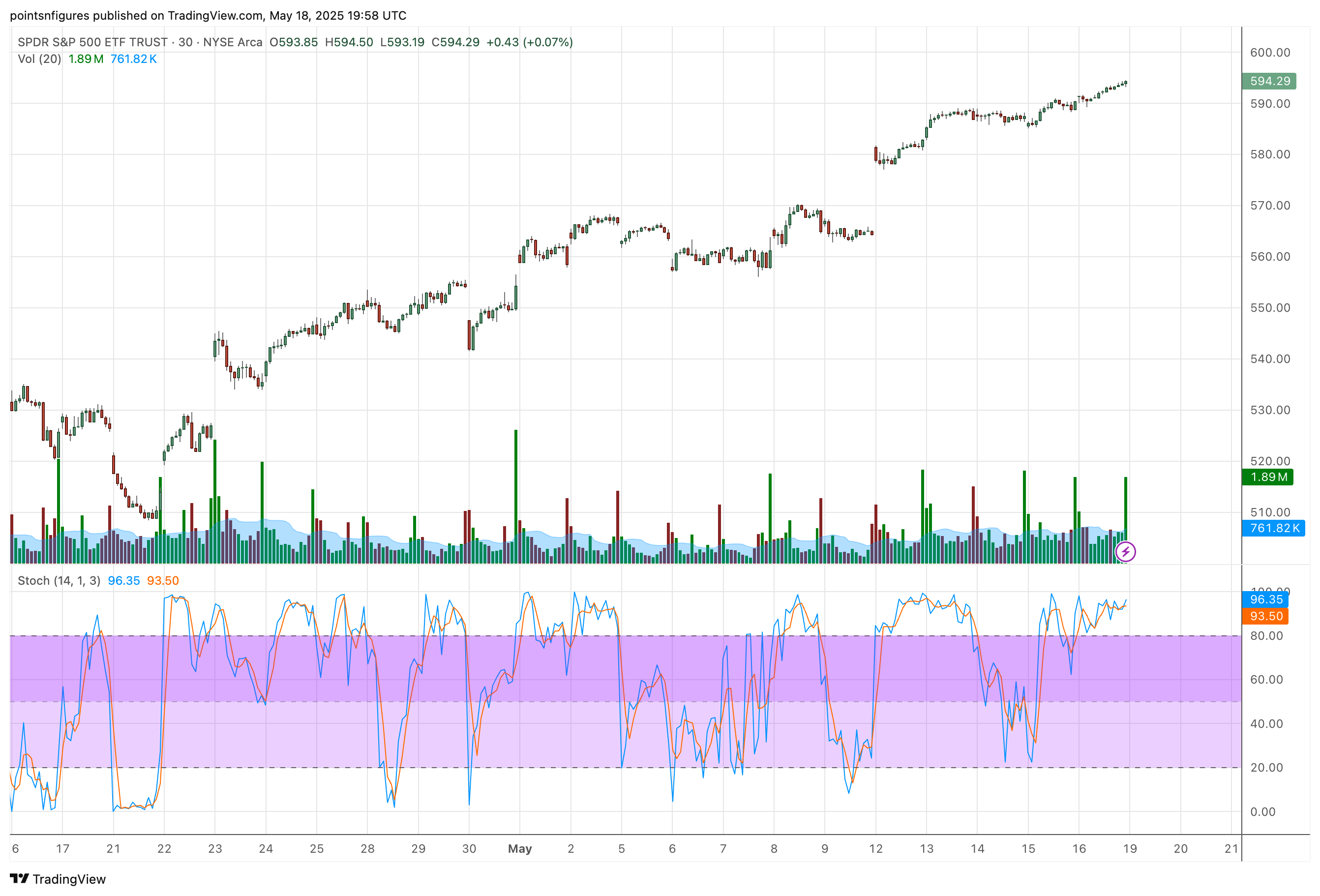
If it opens a lot lower, buy the shit out of it. These guys in power positions inside institutions are generally wrong because they look at the world wrong.
Here is a case and point.
Who runs the Economic Department at Moody’s? Mark Zandi. He used to be on CNBC a lot back in the day. He was the original Cramer. If he said up, it went down. He’s also a big supporter of the economic policies the Democrats propose. He’s not a fan of people like Reagan or Milton Friedman. Mark is an Ivy League Wall Street guy through and through. Wharton/Penn. He is a saltwater economist. This means he puts a lot of value in government action to make things happen. For people like him, there is a large economic effect from the government spending a dollar.
Those of us in the real economy who aren’t on Wall Street understand that Mark’s logic is wrong. I am sure he’s a nice guy. But the way he sets up the problem he is trying to solve is faulty, and the logic he uses to progress through the problem is wrong.
My friend from the trading floor, Jimmy Iuorio, posted this to X.
1) it’s idiotic that it would come now and not 2 years ago when the massively inflationary “inflation reduction act” was passed.
2) it reflects a pervasive belief among the left that raising taxes is the way to increase revenue. That belief is wrong.
3) it does nothing to the aggregate rating of treasuries since the other 2 agencies were already there.
Jim is correct.
We have a huge spending problem in America. Biden started spending billions per day to try and rescue the sinking ship Kamala Harris was piloting into the election. In addition, the Federal Reserve exacerbates the deficit through its policy.
My friend Brian Wesbury has been very accurate at economic forecasting for at least the last 20 years. Once I was in a big commodity trader’s office. He remarked, “I like this Wesbury guy.” The person I am referring to never complimented anyone.
Sometimes the way we account for things is incorrect. That is why if you simply use accounting numbers to make decisions, you will make bad decisions. Congress’s entire debate around spending and taxes always uses accounting numbers.
Today, Brian posted this on X:
Because of mark-to-market accounting…a $400 billion dollar sup-prime loan problem in 2007 turned into a massive financial panic. Once we changed the rule in March 2009, the panic ended. But…the Fed used the crisis to do ZIRP and pay interest on reserves. The inflation this caused forced the Fed to lift rates sharply. This jump in rates crushed the bond market. Banks have roughly $600 in losses on their books. The Fed has roughly $1 trillion in losses on its books. In other words, the Fed’s wrong-headed reaction to the Panic has led to 4 times the losses in bond portfolios today versus back in 2007/08. If we had mark-to-market accounting today, the crisis would be even worse. In addition, the Fed is losing roughly $100 billion per year because it is paying private banks to hold reserves, while earning less than it pays from its bond portfolio. These losses boost the deficit and make it harder to cut tax rates. It’s a total mess.
Much more in Brian’s X timeline on how screwed up the Fed is. I have said that the Fed should be lowering rates right now, and it is nice to see Brian put some hard numbers behind it.
Today, on the news programs, Treasury Secretary Scott Bessent said one of Trump’s strategies is to grow GDP quickly. Growing GDP would decrease the deficit.
Chamath Palihapitiya said this on X today:
Over the past 100 years: The number of banks have gone from 28,000 to 4,500 The number of public companies in the US peaked ~8000 and has since shrunk to ~6000 Meanwhile the amount of regulation and regulatory agencies have exploded. Regulation, at the limit, strangles entrepreneurs, smaller businesses and public companies in favor of consolidators, large rollups and administrators. We need a regulatory reset.
We do need a regulatory reset. Since the passing of Sarbox and Dodd-Frank, our financial regulation along with corresponding incentives to be a public company have been screwed up. Our regulations have made our economy anti-competitive. I had a person try to tell me “nuclear power is expensive,” when in fact it is merely the huge amount of regulations that we have written on nuclear, which makes it more expensive. Nuclear power is cheaper than coal per kilowatt, and when you measure the density of energy resources like Robert Bryce has written on his Substack.
Trump can talk tariffs all he wants. Going to 0% tariffs is a great idea for everyone. But, I think he could make a lot more gain by deregulating EVERYTHING.
"Inflation reduction act" 😆😅🤣
At the very least this is partially politically motivated, because as you stated, it could very well have been done, and probably should have been done, two years ago.
Let's also keep in mind that we have proof now what many of us have known for years, that the Biden administration fudged so many government releases and economic numbers, especially employment numbers.
As for Zandi, I think this blurb from his Wiki page, that includes a quote from him, speaks volumes and I am unaware of any attempts by him to amend his comment, which is absurdly foolish:
"Zandi infamously discounted the 2007–2009 housing market collapse stating to The New York Times in March 2006 that "Even in the most vulnerable markets, most people just have to look through it and ignore it because it's of very little relevance to them."[5
Yeah, I'm sure by 2008/ 2009 that most people were willing to just ignore the housing debacle.🤨🙄😄
My goodness, this guy makes Paul Krugman and Robert Reich seem credible.