
Wine Glut
California's $55 Billion industry in trouble

Do you like wine? If so, do you remember the first bottle that turned you? For me, it was a 1984 Glen Ellyn Merlot from the Sonoma Valley. My wife had brought it home from California. My brother-in-law has lived in California’s wine country almost his entire life after moving there in the early 1970s. We used to go visit him and when we did, we’d taste wine all over. His brother-in-law was a wine maker, so we got to learn about how wine is made and we learned about all the up-and-coming wineries.
That’s how I got on the list for Screaming Eagle in 1992. We don’t auction it, we drink it. I poured the 2010 with my family and my parents last year. Yes, it was unbelievably good but for me to come to that opinion, I had to drink quite a few bottles of wine to understand how truly great it was.
When I moved to Geneva, IL in 1993, there was a small wine shop on Third Street. The owner of the shop had an encyclopedic knowledge about wine. You could go hang out there and open a bottle and share it. On some days, a bunch of people he affectionately dubbed The Swine would show up, pick a varietal, and we’d open a bunch and taste them. That’s how you learn about wine.
If you want to deepen your understanding, wine is really about which one to pair with which food. The crazy smart gourmands and chefs will look for different characteristics in the wine to pair with specific flavors in the food.
I think this is where the wine industry screwed up. It has always been way too snobbish about how it talks about itself.
The right wine paired with the right food indeed elevates the experience. Here is an example. My wife makes the best sauerbraten. I love it. Because it’s beef, I always tried to pair red wine with it, but the acid and ginger in the sauerbraten never paired well. I tried all kinds of red wines. Finally, my buddy who owned the wine shop in Geneva said, “Try a dry Riesling. Sauerbraten is German, and German’s grow riesling.”
I picked a dry Alsatian Riesling from France. Alsace borders Germany and they have been either French or German for millennia. The pairing was perfect and it elevated the entire experience. Since then, I always try to keep some in my cellar.
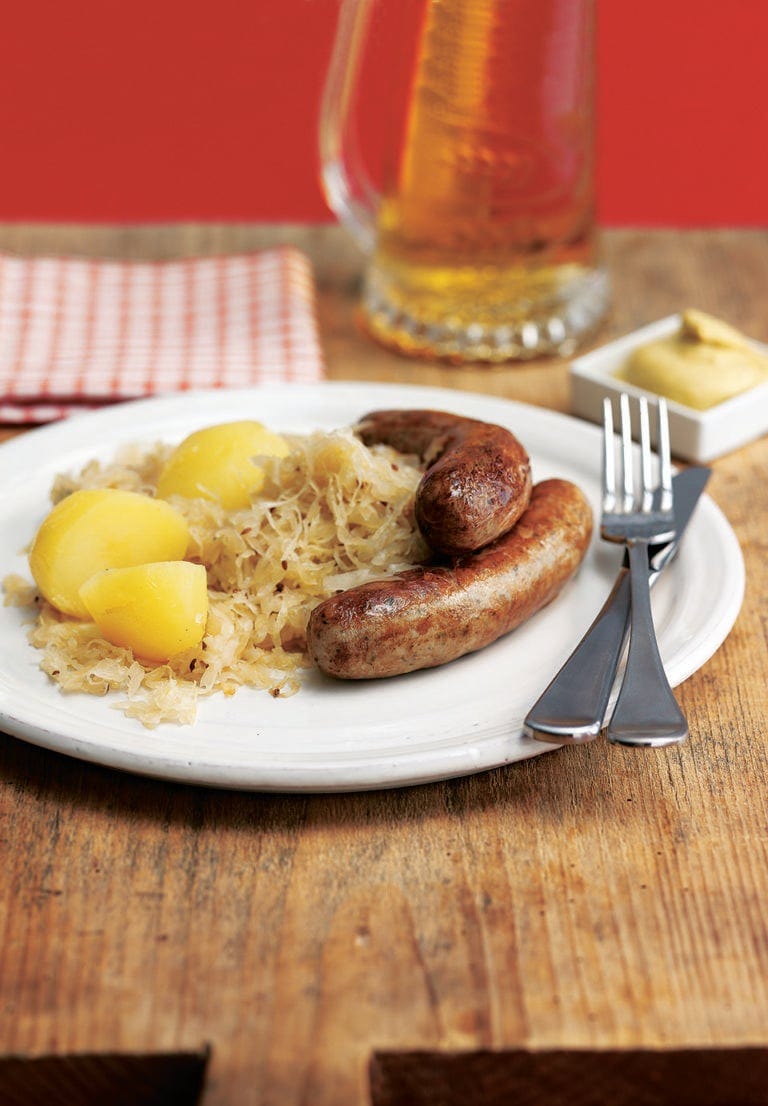
If you don’t want to be fancy, get some good sausage and sauerkraut. Get some mustard. Grill the sausage and then open a chilled bottle of $20 buck riesling from the Mosel region of Germany or an Alsatian one. You will like it.
Now though, the younger generation doesn’t drink wine. If someone is an avid wine drinker they are probably an older person. Hence, the wine glut.
Wineries were used to being able to sell whatever they grew. It fed demand for more vineyards. California has thousands of acres of vineyards. Places like France expanded vineyards as did Spain, Italy and Portugal. The German wine industry started to recover from the ills of WW2 and communism in the East. Argentina, Chile, Australia, and South Africa started producing more wine.
I love this article in the SF Chronicle. It does a great job explaining how tough the wine business is to operate in today.
It’s easy to identify the problems. How do you solve them?
I think one of the first thing lawmakers should do is redo all the regulations for the Bureau of Alcohol, Firearms, and Tobacco on wine, spirits, and beer in the US. They are backward and they were written by people who were focused more on extending the power of Big Government at the time America was emerging from Prohibition.
Instead, rewrite regulations to encourage innovation and competition. That rewards excellence. The market will decide who is excellent, and dictate the price. From the linked SF Chronicle article:
Interviews with 16 California wineries about the present crisis revealed one popular theory: This is an industry that grew complacent, so accustomed to its baby boomer-dominant customer base and its old way of doing things that it hasn’t been forced to meaningfully innovate in a long time.
Lawmakers also ought to remove all tariffs and restrictions on how much wine can be imported to the United States from other countries. That will increase competition and it will force everyone to raise the quality of their wine at lower costs to consumers.
The danger is to try and break up the rampant consolidation that has happened over the last 40 years in the wine industry. Robert Mondavi and Jess Jackson were pioneers in acquiring wineries and consolidating the back-end costs to earn more profit. Bill Foley and others have followed the blueprint. It makes a lot of sense given how the industry is structured and how distribution happens today. Take the shackles off and allow for competition and the game might change. If it doesn’t, that’s the market talking not Big Government.
States like California have also regulated what people can do with their land. I have an old trader buddy who bought 150 acres and planted it in vineyards. He did this in the 1990s. He said if he bought the same property today, he’d have about half the vineyard. Why? Environmental crazies over regulated. That caused the existing land planted to vines to grow in value artificially. Deregulating will let the market decide more efficiently what ought to be planted and will change what’s charged.
These are the kinds of structural regulatory problems that can be changed to make the wine market more of a market rather than a crony capitalist market. Consumers would benefit. We’d see better wine at lower prices and have more choices.
Certainly, innovation on the production side can bring some profitability. I think that is already happening.
The way people talk about wine and label it is all marketing. That’s better for people like Ted Pratt to think about.
I gave up drinking some considerable time ago and miss it not at all. Not sure exactly why I quit, but now I would quit based on alcohol being so bad for the body.
I would pair that lovely sauerbraten with a nice Arnold Palmer.
JLM
www.themusingsofthebigredcar.com
"Now though, the younger generation doesn’t drink wine"...kids today...
Why don't winemakers product, and retailers sell, small-size sample bottles to encourage trying new things? People might happily buy a few $7 bottles, just to see what they like, who would be reluctant to buy $20 or $30 larger bottles.